
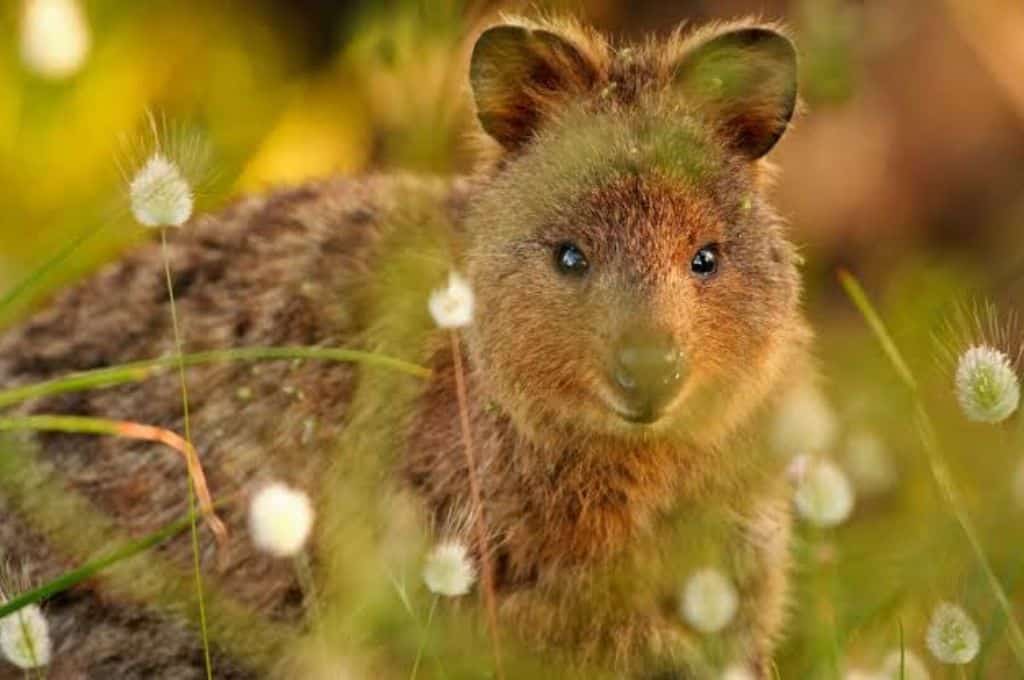
Few creatures have captured the internet’s attention quite like the quokka. With its chubby cheeks, bright eyes, and an unmistakable grin, this small Australian marsupial earned the title of “the world’s happiest animal.” While the nickname sounds like a fairy-tale label, it actually comes from a mix of natural anatomy, island biology, and modern internet culture.
A Natural Facial Structure
The primary reason quokkas look so cheerful comes down to their skeletal and muscular anatomy. A quokka’s mouth naturally turns upward at the corners, and its prominent front teeth and round cheeks frame its face into what looks like a permanent human smile.
When the animal pants to cool off during warm Australian afternoons, its mouth opens slightly, widening this expression. While humans interpret this face as joy, to the quokka it is simply the resting shape of its jaw and a practical way to regulate body temperature.
A Life Without Fear
Another major reason for their cheerful reputation is their unusually trusting demeanor. The largest concentration of quokkas lives on Rottnest Island off the coast of Western Australia. For thousands of years, this island remained free of major land predators like foxes, dingos, and feral cats.
Because quokkas evolved in an environment where almost nothing hunted them, they never developed the instinctual fear that causes most wild animals to flee from larger creatures. When people walk along island paths, quokkas frequently approach them out of plain curiosity rather than running away, reinforcing the idea that they are universally friendly.
The Rise of the “Quokka Selfie”
The title of “the happiest animal in the world” exploded into global pop culture around 2012. Tourists visiting Rottnest Island began kneeling down with their smartphones to capture selfies with the inquisitive creatures.
Because quokkas naturally tilt their heads upward and look straight into camera lenses, the photos consistently looked as if the animal was deliberately posing for a picture with a wide smile. The trend went viral across social media platforms, drawing famous actors, athletes, and travelers worldwide who specifically traveled to Australia just to take a smiling photo with one.
Reality Behind the Smile
Despite their joyful appearance, quokkas are wild animals that face real survival challenges. Mainland populations have suffered steep declines due to habitat destruction, wildfires, and attacks by introduced foxes and feral cats, placing the species under “vulnerable” conservation status.
Even on Rottnest Island, their friendly nature can work against them. Human food can cause severe digestive illness and tooth rot, which is why Australian wildlife authorities enforce strict penalties against feeding or handling them. The quokka’s famous smile is an accidental gift of nature, but giving the animal space and protection ensures that its population continues to thrive.